When is the rainy season?
On Phuket and the Andaman coast the south-west monsoon brings rain from roughly May to October. September and October are usually the wettest months. Rain tends to come as heavy afternoon or evening showers rather than all-day rain, with sunny spells in between.
On Koh Samui and the Gulf coast the pattern is different: the wettest months come later, around October to December. If you plan a trip across the peninsula, check the forecast for both sides.
Month by month
| Months | What to expect on the road |
|---|---|
| May – June | Showers start; many dry mornings. Quiet roads and lower prices. |
| July – August | Mixed weather; short heavy showers, often sunny between them. |
| September – October | Wettest months; longest downpours and local flooding. Lowest prices. |
| November | Rain eases; roads dry out. A good shoulder month. |
See our month-by-month guide for temperatures and rainfall.
What a tropical downpour is like
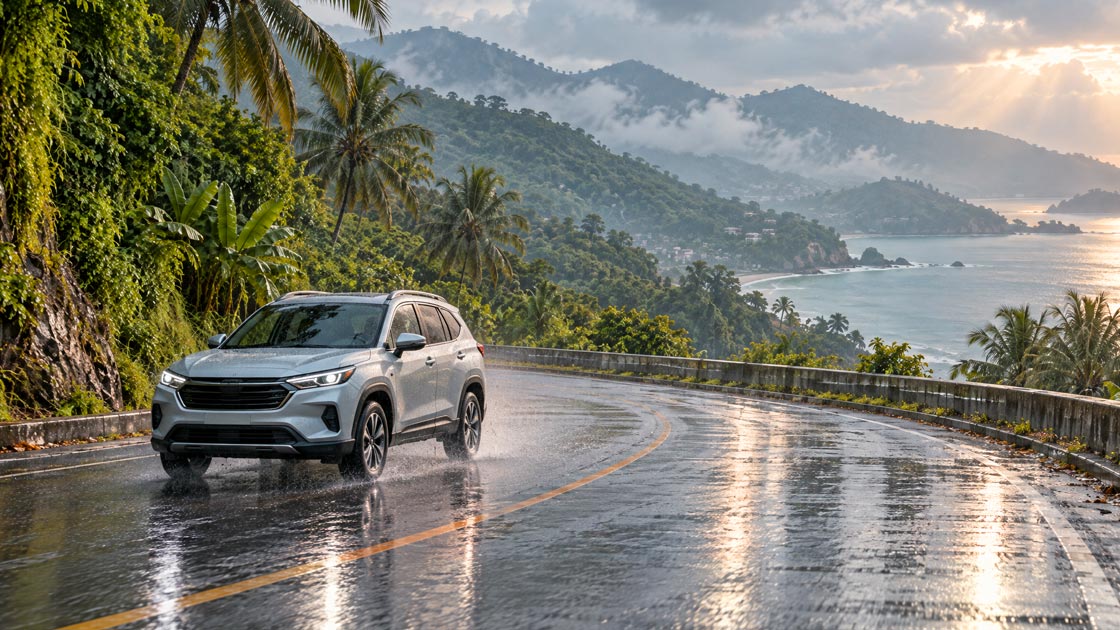
If you have not driven in the tropics before, the first downpour can be a surprise. The sky darkens within minutes, rain falls so hard that wipers on full speed barely keep up, and water runs across the road in sheets. Most showers pass within 20–60 minutes, after which the sun often comes out and the roads steam dry.
The safest response is simple: slow right down, switch on your dipped headlights, keep well back from the vehicle in front and, if visibility becomes poor, pull into a petrol station or car park and wait. There is rarely a reason to push on through the worst of it.
Hazards to expect
- Surface water collects quickly on low roads – never drive into water if you cannot see the road.
- Slippery hills: the first rain after a dry spell lifts oil and dust and makes roads like Patong Hill very slick.
- Poor visibility: tropical downpours can cut visibility to a few metres within minutes.
- Scooters slow down sharply or stop under bridges and trees to shelter.
- Potholes hidden under puddles, especially on side roads.
Roads to take extra care on
- Patong Hill (Route 4029) – steep bends that turn slick in the first rain. Use a low gear on the way down.
- Kata–Karon hill and the Karon Viewpoint road – narrow with sharp corners.
- The road up to the Big Buddha – very steep; use a low gear both ways.
- Low-lying stretches near Phuket Town and Chalong – these flood first during long downpours.
- Samet Nangshe and other mainland viewpoints – steep, unsealed sections can be muddy.
Smart habits
- Switch on dipped headlights in rain; do not drive with hazard lights on.
- Double your following distance.
- Brake gently and early, especially downhill.
- Wait out the heaviest downpours in a café – they rarely last long.
- Plan sightseeing and boat trips for the morning; afternoons are wetter.
- Brush up on local road rules in Driving in Thailand: rules and road habits.
Before you drive away from the airport
- Wipers: test them on every speed and use the washer – worn blades smear rather than clear.
- Tyres: look for even tread on all four tyres; bald tyres aquaplane easily.
- Lights: check headlights, brake lights and indicators.
- Air-con and demister: windows mist up quickly in humid rain – make sure the demister clears the windscreen.
- Damage sheet: note existing marks as usual; rainy-season scrapes are common.
If anything is not right, ask the desk to fix it or swap the car before you leave the airport.
Choosing the right car
A compact SUV sits higher and handles standing water and potholes better than a small hatchback, and the price gap is often small in the green season. At pick-up, check the wipers, tyres and lights, and ask the desk to replace a worn wiper blade before you leave. Make sure the air-con demists the windscreen properly.
If you get caught in a flood
- Do not drive into water if you cannot see the road surface or the kerb.
- If you must go through shallow water, drive slowly and steadily in a low gear, then test the brakes afterwards.
- If the engine stops in water, do not try to restart it – this can wreck the engine and is rarely covered by insurance.
- Move to higher ground, call the rental company and wait for help.
Insurance in the rainy season
Damage from driving into floodwater is usually not covered by standard CDW. Read Car hire insurance in Thailand explained and consider reducing the excess – rainy-season scrapes on hill roads are more common.
Planning your days around the weather
- Mornings: usually the driest – the best time for viewpoints, beaches and boat trips.
- Afternoons: plan indoor sights – Phuket Old Town's cafés and museums, temples, markets and the malls.
- Boat trips: some routes, such as the Similan Islands, close for the monsoon; others run when the sea allows. Check the day before.
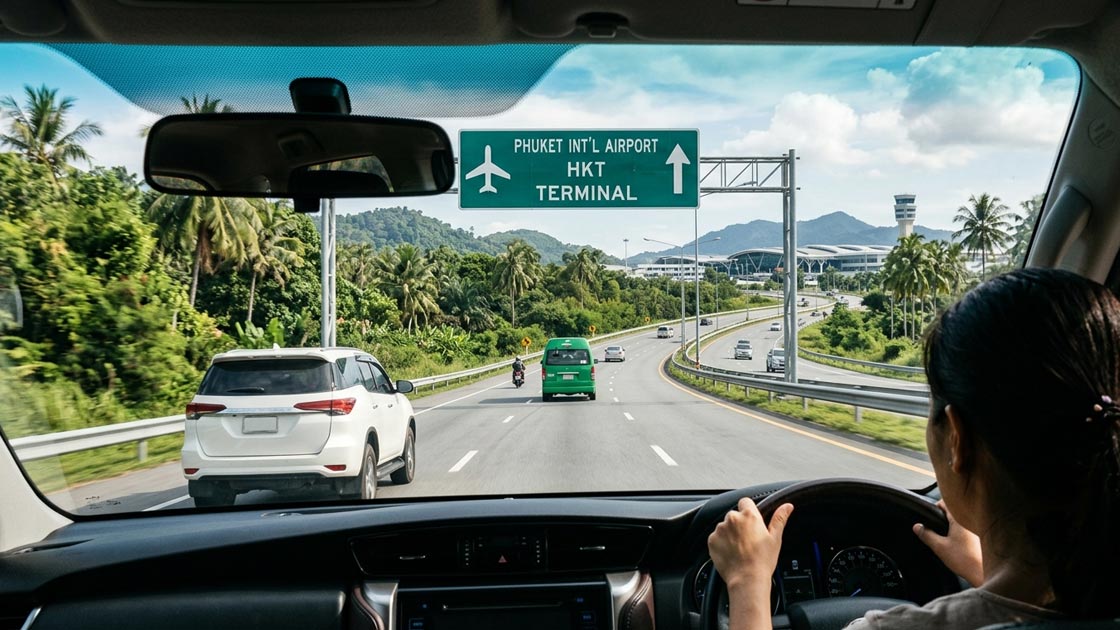
- Flights: leave extra time for the drive to the airport on wet evenings – traffic slows sharply in heavy rain.
Rainy-season driving checklist
- Check the forecast and rain radar each morning.
- Keep dipped headlights on in rain; hazard lights only when stopped.
- Double your following distance and brake early.
- Avoid driving through water you cannot see the bottom of.
- Use a low gear on steep hills, up and down.
- Keep the rental company's number and roadside assistance number in your phone.
- Carry a small umbrella and a towel in the car.
Is the rainy season worth it?
For many drivers, yes. Rental prices are usually at their lowest in September and October, roads and beaches are quieter, and the island is at its greenest. Keep plans flexible, check the forecast each morning and save indoor sights – Phuket Old Town's cafés and museums, the malls – for the wettest afternoons.