Why the checks matter
Most disagreements about rental cars aren't about big accidents. They are about a scratch on a bumper that nobody remembers, a tyre that was already worn, or a fuel gauge that sat just under full. All of those are easy to settle if you have photos from pick-up, and hard to argue about if you don't.
None of the steps below take long. Do them every time, even when the car looks brand new and the staff are in a hurry.
At the desk
- Read the contract total and compare it with your voucher. Ask about any line you don't recognise before you sign.
- Confirm the deposit amount and which card it is going on. See Car rental deposit at Phuket Airport: cards, holds and refunds.
- Check the fuel policy – full-to-full is the most common.
- Ask about the return: where the return bay is, the desk hours on your return day and what happens if you arrive early or late.
- Get the 24-hour number for breakdowns and accidents, and save it in your phone.
- Decline extras you don't need. If you already bought full protection with your booking, you don't have to buy the desk's cover too – but understand that the desk cover usually lowers the deposit, while booking cover is claimed back afterwards.
The walk-round: what to look at
Walk round the car with the staff member and make sure every mark goes on the damage sheet, however small. Then film your own slow video. Things people often miss:
- Wheels and alloys – kerb scuffs are the most common deduction.
- Tyres – tread depth and sidewall bulges. Tyres are often excluded from standard cover.
- Windscreen – small chips spread in the heat.
- Roof and the lower edge of the bumpers – easy to miss when you are standing up.
- Interior – seat stains, burns and the boot carpet.
- Spare wheel and jack – check they are actually there.
Film in daylight if you can. In the airport car park at night, use your phone torch and go slowly.
Inside the car before you drive off
- Photograph the fuel gauge and mileage together.
- Check the air-conditioning works properly – you will want it.
- Find the headlights, wipers and hazard lights. In many cars used in Thailand the indicator is on the right-hand stalk.
- Make sure the registration and insurance documents are in the glovebox. Police can ask to see them.
- Check which fuel the car takes – it is usually printed inside the fuel flap. Most small cars use Gasohol 91 or 95; pickups, large SUVs and vans often use diesel.
- Pair your phone and set the first destination before you leave the parking bay.
During the rental
- Keep the rental contract and your documents in the car, but take your passport with you.
- Park in shade where you can; the sun is hard on paintwork and dashboards.
- Don't drive onto sand, beaches or unsealed tracks – damage there is usually not covered.
- If anything happens, call the rental company first and take photos. For anything more than a scratch, a police report is usually needed for the insurance.
Before you return the car
- Refuel close to the airport. There are several petrol stations on Route 402 in Thalang, a few kilometres south of the airport junction. Keep the receipt.
- Empty the car. Check the boot, door pockets and under the seats – sunglasses and charging cables are the classics.
- Shake out the sand. A quick clean at a petrol station avoids a cleaning fee.
- Leave enough time: drive time + about 30 minutes for the return + the airline's check-in advice.
At the return bay
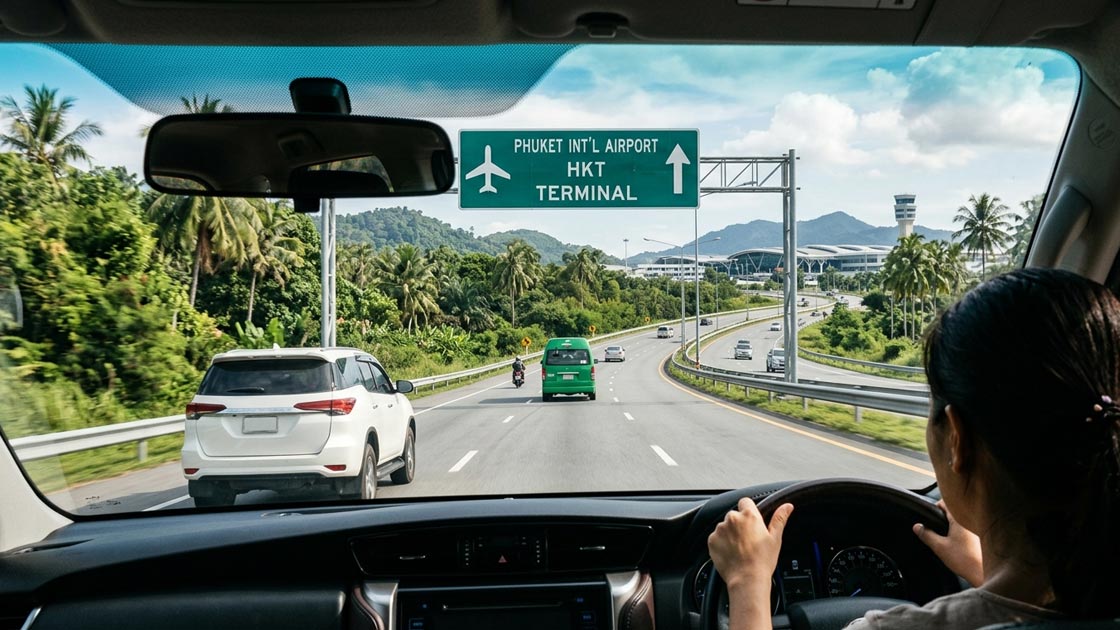
- Follow the "Car Rental Return" signs on the airport approach road.
- Before you hand over the keys, film the car again from all sides, plus the fuel gauge and mileage.
- Wait for the check-in if staff are there, and ask for a signed return slip showing no new damage and a full tank.
- If you use a key drop, photograph the car in the bay and the keys going into the box. With a key drop you usually stay responsible until staff check the car.
If you are charged after you leave
Ask the company in writing for the damage report, photos and repair invoice. Compare them with your own pick-up and return photos. If you can show the mark was there before, most companies refund it. If they don't, your card issuer may be able to help with a dispute – your return slip and photos are the evidence they will ask for.